

Why offboarding staff is just as important as onboarding
Bringing new people into a business usually follows a clear checklist. The reverse process when someone leaves often receives less attention. Everyday users and decision makers in smaller operations can overlook the steps required to close access cleanly. Local firms on the New South Wales mid-north coast gain stronger protection when the departure process receives equal care.
Shifts in workforce movement
People move between roles and organisations more frequently than in the past. Each departure leaves behind logins, shared folders, email accounts and stored files. If these remain open, the business retains unnecessary exposure long after the person has gone.

Reasons the leaving process carries weight

Active accounts belonging to former workers create open doors. Files can be accessed or altered without current authority. Confidential information may travel further than intended. Decision makers then face questions about control and may need to spend time closing gaps that should have been sealed on the final day.
Clear meanings for central ideas
These ideas become practical once matched to the actual systems a business already runs.
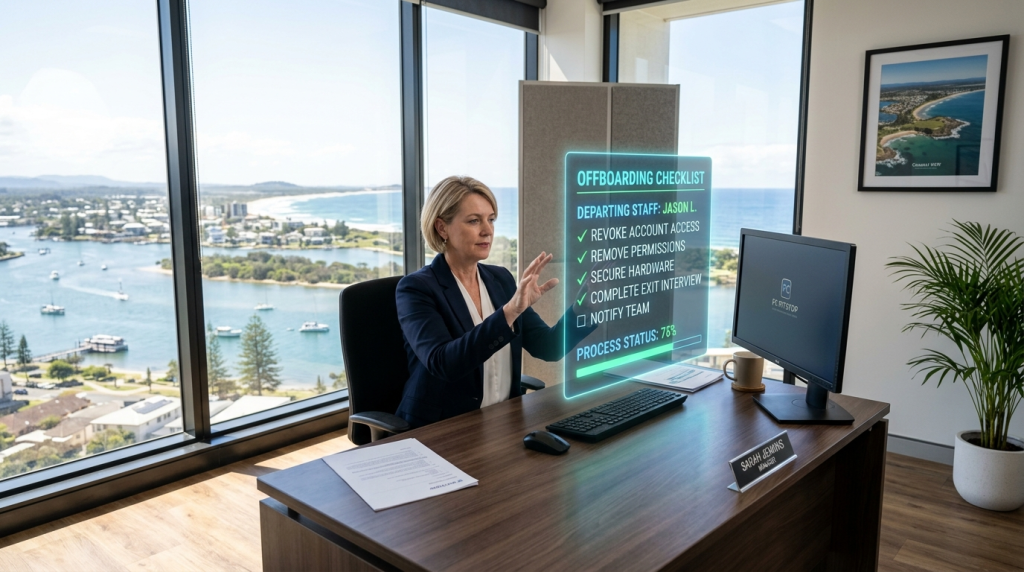
Access removal means switching off every login and permission linked to the departing person.
Information handover covers the transfer of important files, contacts and ongoing work before the final day.
Account closure confirms that email, shared drives and any external tools no longer accept the old credentials.
Approaches that suit different workplaces
Some operations use a simple printed checklist that covers every system the person could reach. Others assign one responsible person to confirm each step on the final day. A few schedule a short follow-up a week later to catch anything missed. The useful approach depends on how many systems and how much sensitive information the role involved.
Results for the wider organisation

When departures are handled completely, the business retains full control of its information. Former access cannot be used to view or change records. Decision makers gain confidence that only current people hold active permissions. Daily work continues without the background risk of forgotten accounts.
Help provided by PC Pitstop
PC Pitstop assists local firms with clear, practical processes for managing departures. We focus on steps that fit smaller operations and avoid unnecessary complexity. Support covers both the checklist design and the technical actions required to close access across common systems.


Still treating departures as an afterthought?
Visit our store and speak with the team about Technology Consulting. We will help you build a simple, reliable process for closing access and handing over information when people leave. One conversation gives you a clear checklist ready to use with your next departure.