


Why your website and email hosting need to be separated

Many smaller operations place their public site and their message system on the same server space. The arrangement looks simple at first. Yet it creates unnecessary links between two different functions. Everyday users and decision makers gain clearer control and stronger reliability when the two are placed independently. Enterprises based in the New South Wales mid north coastal area see practical benefits from this split.
Shifts in how online presence is arranged
In earlier years a single provider often handled both the public pages and the message system. Today the two serve distinct purposes and face different pressures. Public pages need speed and steady availability for visitors. Message systems need consistent delivery and protection from unwanted interference. Keeping them together ties their fortunes to each other.

Reasons separation delivers value
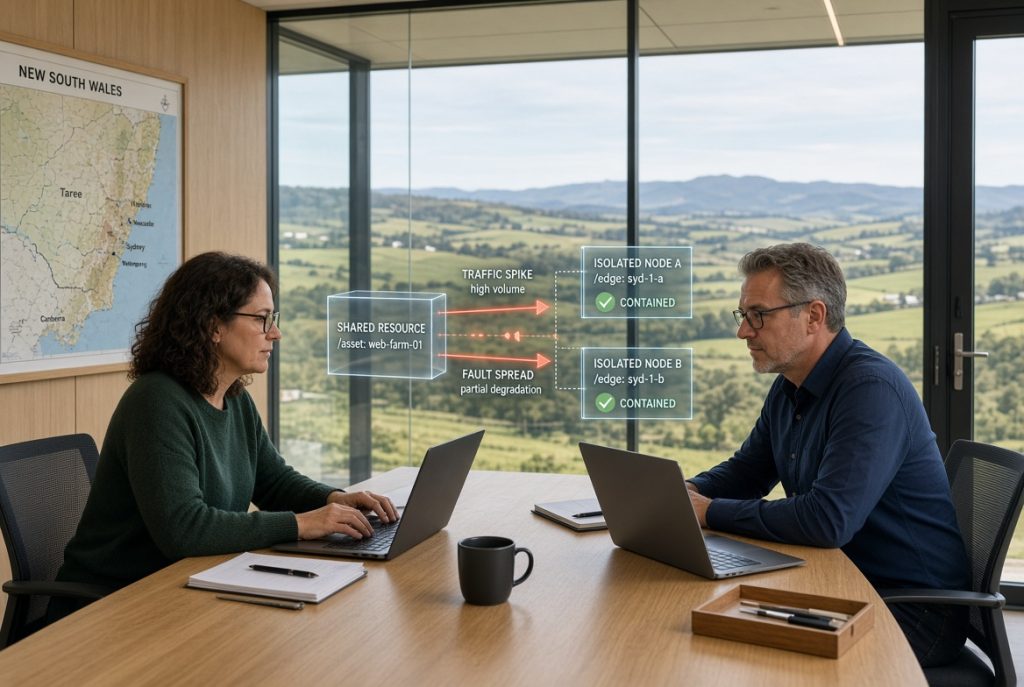
When both sit on the same space, a problem with one can affect the other. A spike in traffic to the public pages may slow message delivery. An issue that reaches the message system can place the public pages at risk. Independent placement limits the spread of any single fault and makes each function easier to manage on its own terms.
Clear explanations of Central Ideas
These ideas become useful once matched to the actual public site and message addresses a business already runs.
Website hosting refers to the space that stores and serves the public pages visitors see.
Email hosting is the separate arrangement that sends, receives and stores business messages.
Shared placement means both functions rely on the same underlying resources.
Routes that suit varying operations
Some firms move only the message system to a dedicated arrangement while leaving the public pages where they are. Others shift both yet keep them with different providers. A few begin with a simple review of current performance and risk points before deciding. The practical route depends on how heavily each function is used and how quickly any interruption would affect trading.

Results for the wider organisation

Independent placement improves reliability for both functions. Message delivery stays steady even when the public pages experience heavy traffic. Public pages remain available even if the message system needs attention. Decision makers gain cleaner options for updates, backups and future changes without one side limiting the other.
Help provided by PC Pitstop
PC Pitstop assists local enterprises with clear advice on arranging public pages and message systems independently. We focus on practical steps that match the size and daily needs of smaller operations. Support covers both the planning stage and the actual transition so work continues with minimal interruption.


Useful measures to consider
Check whether your public pages and message system currently share the same provider and resources. Note any past occasions when a problem on one side affected the other. Those points show whether separation would deliver worthwhile improvement. A short conversation often clarifies the simplest path forward.
Still running your public pages and messages from the same place?
Visit our store and speak with the team about Technology Consulting. We will review your current arrangement and show straightforward ways to separate the two functions for better reliability and control. One discussion gives you a clear plan that fits the way your business already operates.